


September 2, 2026
Nepal’s devastating Bhotekoshi River flood has entered a major search, recovery and identification phase, with 1,127 bodies recovered and 4,858 people still reported missing, according to the latest figures from Nepal Police.
Authorities say 6,541 people have been rescued from affected areas, while thousands of police personnel remain deployed for search operations, relief distribution, body management and the relocation of families from high-risk areas.
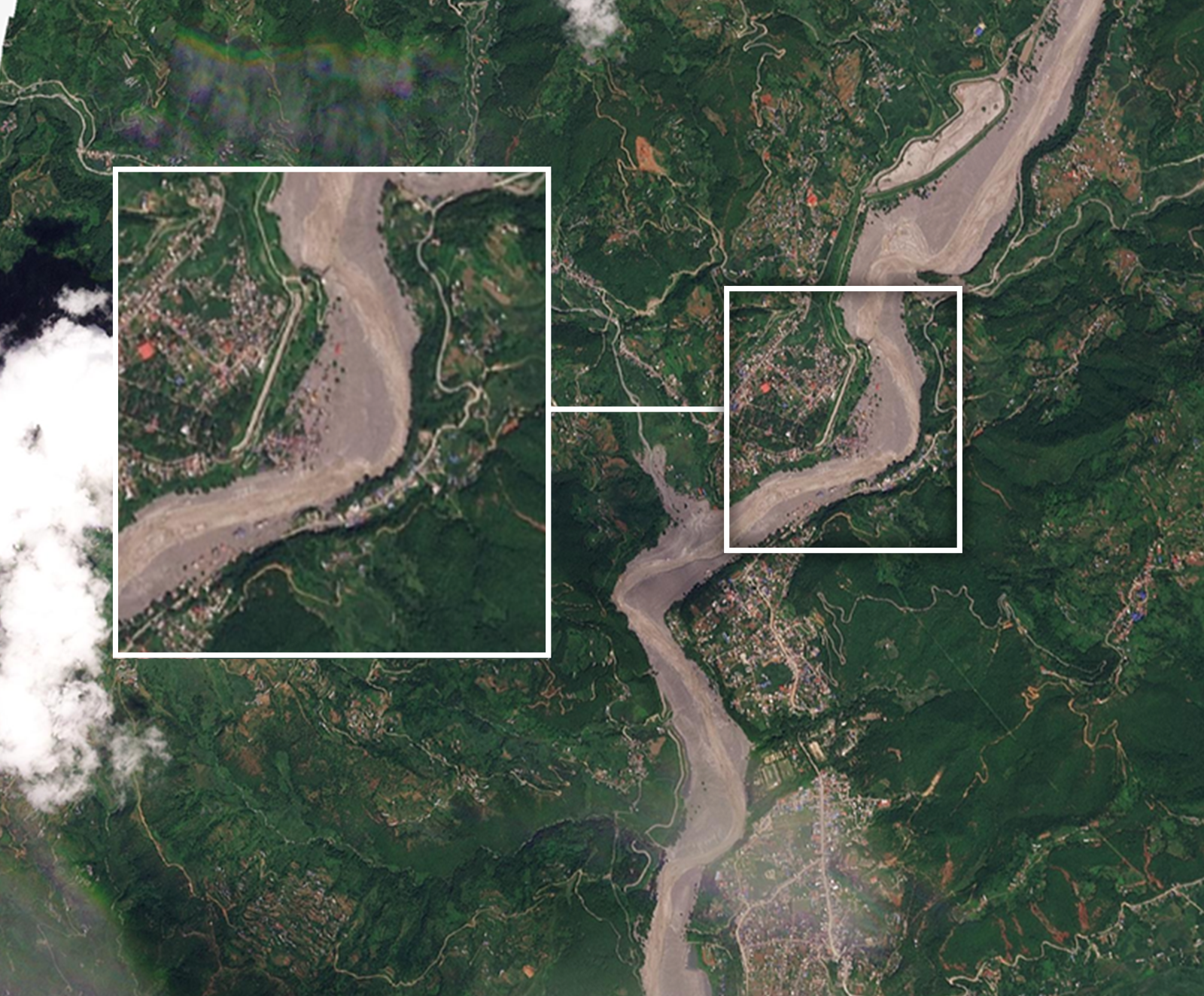
The disaster began on August 26 after an ice-and-rock avalanche in the Himalayan region triggered a powerful surge through the Bhotekoshi River system. The resulting flood devastated settlements, roads, border facilities and hydropower infrastructure before carrying debris and victims downstream across several districts.
Key Facts
| Situation | Latest figure |
|---|---|
| Bodies recovered | 1,127 |
| People reported missing | 4,858 |
| People rescued | 6,541 |
| Police deployed | 7,912 |
| Bodies with postmortem/legal procedures completed | 1,113 |
| Bodies handed to relatives | 95 |
| Unidentified body records uploaded | 911 |
Figures reflect the latest Nepal Police figures reported on September 2, 2026.
Table of Contents
- What is happening in Nepal today?
- Where have the bodies been recovered?
- How many people are still missing?
- Where are rescue teams searching?
- What happened to hydropower workers?
- What caused the Nepal flood?
- Which districts were affected?
- What are India, China and other countries doing?
- Is more flooding possible?
- What happens next?
What Is Happening in Nepal Today?
The immediate emergency has evolved into a large-scale search and recovery operation.
Nepal Police says 1,127 bodies have now been recovered. The bodies were found not only near the flood’s origin in Rasuwa but also far downstream, including in Chitwan, Nawalparasi East and Nawalparasi West. Nine bodies have also been recovered in India.
Police have completed postmortem and legal identification procedures for 1,113 bodies, while 95 bodies have been handed over to relatives.
The identification process remains a major challenge. Details of 911 unidentified bodies have been uploaded to the Nepal Police website to help families determine whether missing relatives are among those recovered.
How Many People Are Still Missing?
Nepal Police currently reports 4,858 people as missing.
That figure should be treated as a reported missing-person figure rather than a final death toll. Search operations remain active, and authorities are continuing to locate people, recover bodies and reconcile missing-person information.
The scale of the missing-person crisis is one of the most difficult aspects of the disaster because entire communities, transport routes and infrastructure were swept away or buried under debris.
Where Have the Bodies Been Recovered?
The latest police breakdown shows that bodies have been recovered across multiple districts:
| Location | Bodies recovered |
|---|---|
| Rasuwa | 45 |
| Nuwakot | 155 |
| Dhading | 59 |
| Chitwan | 348 |
| Gorkha | 66 |
| Tanahun | 38 |
| Nawalparasi East | 217 |
| Nawalparasi West | 190 |
| India | 9 |
| Total | 1,127 |
The distribution illustrates how far floodwater and debris travelled downstream from the original disaster zone.
What Are Rescue Teams Doing Now?
Rescue teams are working across several fronts.
Police personnel are searching affected communities, clearing roads, distributing relief supplies and moving families away from high-risk locations.
One of the most difficult operations is the search around hydropower facilities where workers may remain trapped inside tunnels buried or obstructed by mud and debris.
Specialised rescue personnel from Nepal, India and China have been working alongside Nepali authorities at critical hydropower sites.
South Korea has also dispatched a 44-member Korea Disaster Relief Team equipped with search dogs, drones, acoustic and visual detection equipment, thermal imaging cameras, pumps and other rescue tools. The team arrived in Nepal on September 2 and planned to coordinate its operations with the Nepalese government.
A US-based Crisis Response International team has also arrived to assist with searches around the Chilime hydropower tunnels using specialised listening equipment intended to detect possible signs of life.
What Happened to the Hydropower Workers?
Hydropower facilities have become a central focus of the rescue effort.
Several projects were severely damaged by the flood and associated debris. Some workers were believed to be inside underground areas when the disaster struck.
The tunnel environment creates a particularly difficult rescue problem because rescuers have to deal with collapsed material, water, unstable structures and restricted access.
Reuters reported that specialised teams have been using excavators, helicopters and temporary bridges while searching hydropower sites.
The situation also highlights a broader issue for Nepal: the country’s rapidly expanding hydropower sector is operating in a mountainous environment exposed to earthquakes, landslides, floods and changing glacier conditions.
What Caused the Nepal Flood?
The disaster was not simply a conventional period of heavy monsoon rain.
The August 26 event began in the high Himalayan region, where an ice-and-rock collapse generated a huge surge of water, rock, mud and debris.
Reuters reported that scientists examining satellite imagery found evidence consistent with a major high-altitude collapse and that the resulting torrent entered river systems flowing through Tibet and Nepal.
Nepal’s Kathmandu Post has also reported evidence pointing to an ice avalanche and debris lake in the upper Bhotekoshi area as part of the sequence that triggered the flood.
The precise scientific chain of events remains an important area for continued investigation.
Was Climate Change Involved?
Climate change is an important part of the wider discussion, but it should not be presented as a simplistic single-cause explanation for this particular event.
Reuters reported that Nepal’s prime minister has linked the disaster to the growing risks faced by the Himalayan region in a warming climate. Chinese state media has also described glacier instability under the long-term effects of global warming as a factor.
The broader scientific concern is that warming temperatures can alter glaciers, snow and high-altitude landscapes, potentially increasing the instability of some Himalayan environments.
However, the exact contribution of climate change to the August 26 event requires scientific assessment rather than assumption.
Which Areas Were Worst Affected?
The flood originated around Rasuwa and then affected downstream communities along the Bhotekoshi and connected river systems.
Major affected areas include:
- Rasuwa
- Nuwakot
- Dhading
- Chitwan
- Gorkha
- Tanahun
- Nawalparasi East
- Nawalparasi West
The disaster damaged homes and settlements as well as roads, bridges, border infrastructure and hydropower facilities.
What Are India and China Doing?
International assistance has become increasingly important as Nepal confronts the scale and technical difficulty of the rescue operation.
India has sent multiple relief shipments. Its latest aircraft carried an 11-member rescue team, specialist equipment and 5.5 tonnes of medical supplies.
China has provided emergency financial assistance and technical support. China’s Ministry of Foreign Affairs said the Chinese government provided $2 million in emergency flood-relief assistance, while the Red Cross Society of China provided another $200,000 to Nepal’s Prime Minister Disaster Relief Fund. China has also supported Nepal with tunnel rescue teams, relief supplies and disaster-area imagery and hydrological and meteorological information.
South Korea has deployed its own specialist disaster-response team, while other international groups are supporting search and humanitarian operations.
What Does the Disaster Mean for Nepal’s Hydropower Sector?
The disaster is likely to raise difficult questions about how hydropower infrastructure is planned, protected and operated in high-risk Himalayan environments.
Nepal has enormous hydropower potential and sees electricity exports as an important part of its economic development strategy.
But hydropower projects in mountainous terrain can face risks from:
- Landslides
- Flash floods
- Glacial hazards
- Earthquakes
- Rockfalls
- River surges
- Dam and tunnel damage
- Road access failures
The current rescue operation demonstrates how an extreme natural event can simultaneously disrupt electricity infrastructure, transportation, communications and emergency access.
Is More Flooding Possible?
Authorities and residents remain concerned about secondary hazards.
Nepal’s Department of Hydrology and Meteorology continues to monitor rainfall, river levels and weather conditions through its national monitoring systems. The department also provides flood early-warning information.
This means communities in vulnerable areas should continue following official warnings rather than assuming that the end of the initial flood means the danger has completely passed.
Heavy rain can trigger new landslides, raise river levels and make damaged slopes and infrastructure even more dangerous.
What Happens Next?
The next stage will involve three overlapping priorities:
1. Search and rescue
Teams will continue searching for missing people, particularly around inaccessible communities and hydropower tunnels.
2. Identification and recovery
Authorities must identify recovered victims and reunite remains with families wherever possible.
DNA sampling and other forensic evidence are increasingly important when bodies cannot be identified visually.
3. Relief and reconstruction
Beyond the immediate rescue operation, Nepal faces a much longer recovery process involving:
- Homes
- Roads
- Bridges
- Electricity infrastructure
- Hydropower facilities
- Communications
- Border facilities
- Businesses
- Livelihoods
- Public services
The scale of debris alone presents a major logistical challenge. Reuters has reported an estimated 2.2 million tonnes of debris from the disaster.
What Does This Mean for Ordinary People?
For families directly affected by the disaster, the most urgent issues remain finding missing relatives, identifying recovered victims, obtaining shelter and accessing essential services.
The people living downstream from unstable mountain areas, the disaster is also a reminder that river and landslide risks can extend far beyond the location where a high-altitude event begins.
For travellers, businesses and international organisations, conditions should be assessed destination by destination rather than treating the entire country as equally affected.
What Does This Mean for Nepal?
The disaster is larger than a single flood.
It raises questions about Nepal’s disaster-warning systems, cross-border data sharing, hydropower infrastructure, emergency access, climate adaptation, mountain development and the country’s ability to respond when a high-altitude event rapidly turns into a downstream humanitarian crisis.
Nepal’s Department of Hydrology and Meteorology provides real-time weather and hydrological monitoring, while the government continues to coordinate emergency response through national disaster-management mechanisms.
The immediate priority, however, remains straightforward: find survivors, locate missing people, identify victims and get assistance to affected communities.
Nepal Flood Latest News: Bottom Line
The Nepal flood disaster remains an active emergency on September 2.
The latest Nepal Police figures put the number of recovered bodies at 1,127, with 4,858 people still reported missing and 6,541 rescued. Search teams remain deployed across multiple districts, while specialised international teams are assisting with particularly difficult hydropower-tunnel searches.
The disaster began with a major Himalayan ice-and-rock event on August 26 and developed into a devastating flood along the Bhotekoshi river system.
For Nepal, the immediate challenge is rescue and recovery. The longer-term challenge will be understanding how mountain hazards, climate change, infrastructure development and disaster preparedness interact—and how the country can reduce the risk of another catastrophe of this scale.
Key facts
- Disaster: Bhotekoshi River flood
- Initial event: August 26, 2026
- Latest update: September 2, 2026
- Bodies recovered: 1,127
- Missing: 4,858
- Rescued: 6,541
- Police deployed: 7,912
- Bodies with procedures completed: 1,113
- Bodies handed to families: 95
- Unidentified body records: 911
Key takeaway
Nepal is no longer dealing only with the initial flood emergency; it is now facing a massive search, identification, humanitarian and reconstruction challenge.
FAQ
1. What is the latest Nepal flood news today?
The latest Nepal Police figures reported on September 2 say 1,127 bodies have been recovered, 4,858 people remain reported missing and 6,541 people have been rescued. Search and recovery operations continue.
2. How many people have died in the Nepal floods?
Nepal Police has reported 1,127 recovered bodies as of the latest September 2 update. This is a recovered-body count and should not automatically be treated as a final death toll while searches continue.
3. How many people are missing in Nepal?
Nepal Police currently reports 4,858 people missing in connection with the disaster.
4. Where did the Nepal flood happen?
The disaster began around the Bhotekoshi River area near Rasuwa and affected multiple downstream districts including Nuwakot, Dhading, Chitwan, Gorkha, Tanahun and the Nawalparasi districts.
5. What caused the Nepal flash flood?
The disaster followed a major ice-and-rock collapse in the Himalayan region that sent water, rock, mud and debris into river systems flowing toward Nepal.
6. Are rescue operations still continuing in Nepal?
Yes. Police, the Nepali Army, Armed Police Force and international specialist teams continue searching affected areas and hydropower facilities.
7. Are people still trapped inside hydropower tunnels?
Authorities have been searching hydropower tunnels where workers may remain trapped. Specialist teams from several countries have joined the effort because of the difficult underground conditions.
8. Is the Nepal flood linked to climate change?
Climate change is part of the broader scientific and political discussion surrounding Himalayan glacier instability, but the precise contribution of climate change to this specific disaster requires scientific assessment.
9. Are India and China helping Nepal?
Yes. India has sent additional rescue and medical assistance, while China has provided financial aid, technical assistance, rescue teams and disaster-related information.
10. Is Nepal still at risk of flooding?
Flood and weather monitoring remains important because monsoon rainfall can create additional river, landslide and access risks. Nepal’s Department of Hydrology and Meteorology continues monitoring weather and river conditions.