


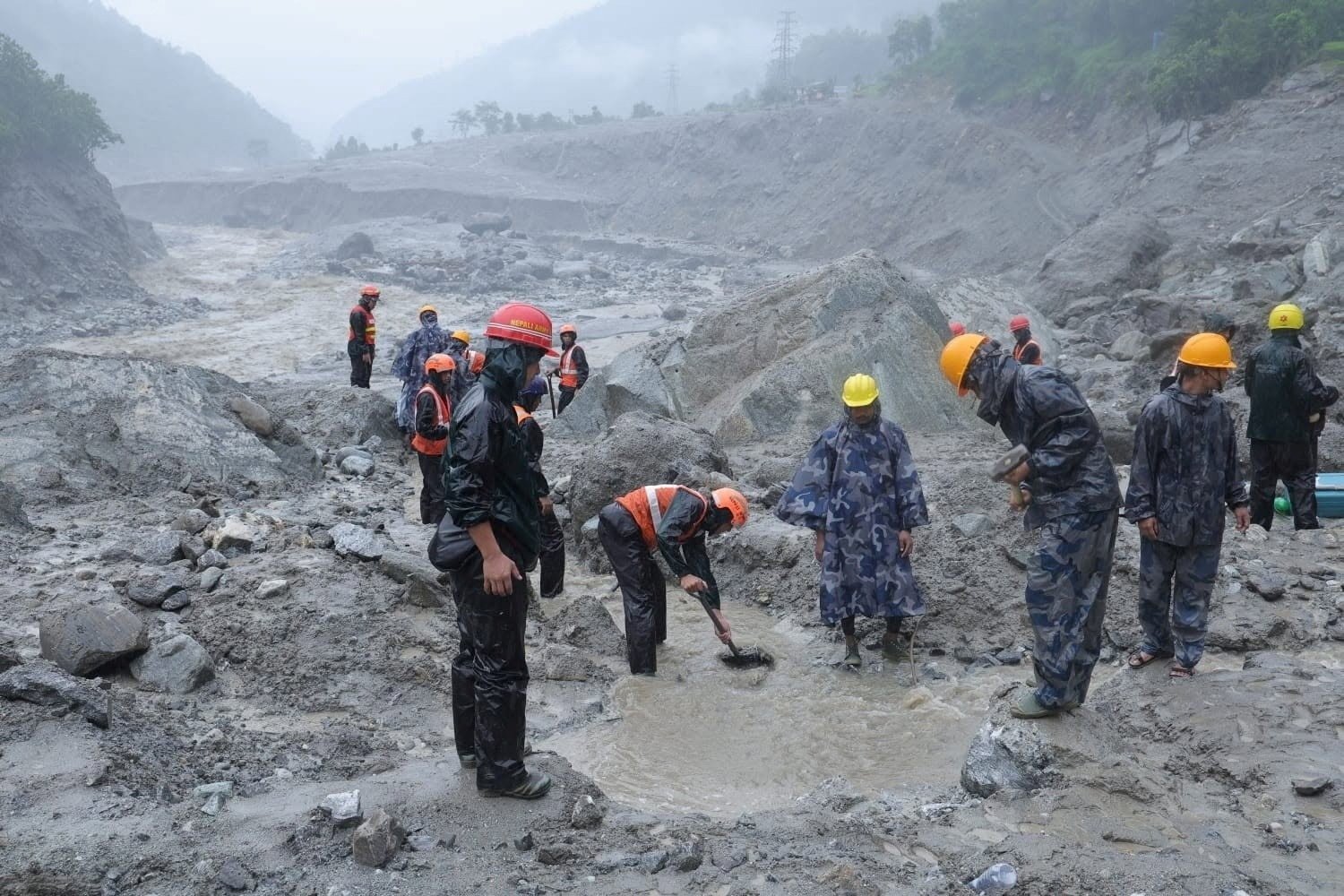
Nepal’s devastating flash floods have entered a new phase, with rescue teams reaching remote communities, restoring access and continuing searches for people missing after the disaster struck the Himalayan region on August 26.
The latest reporting on September 1 puts the death toll in Nepal at 987, while 3,916 people remain missing, according to figures cited by the Associated Press from Nepal’s disaster authorities. At least 11,814 people have been rescued so far.
The disaster also continues to affect Nepal’s hydropower sector, where hundreds of workers are believed to have been caught inside damaged or flooded tunnels.
The situation remains fluid, and casualty figures can change as authorities identify recovered bodies, reconcile missing-person records and reach isolated areas.
Key Facts
| Situation | Latest reported figure |
|---|---|
| Deaths in Nepal | 987 |
| People still missing | 3,916 |
| Foreign nationals among missing | 583 |
| People rescued | At least 11,814 |
| Disaster began | August 26, 2026 |
| Main affected areas | Rasuwa, Nuwakot, Dhading and downstream districts |
| Major rescue challenge | Damaged hydropower tunnels |
| Main rivers affected | Bhote Koshi, Trishuli and downstream river systems |
The figures above reflect the latest September 1 reporting. The previous NDRRMA update, issued at 6pm on August 31, recorded 939 recovered bodies and 3,925 people out of contact, illustrating how quickly the official figures have been changing.
Table of Contents
- What happened in Nepal?
- What is the latest Nepal flood death toll?
- How many people are still missing?
- What is happening with hydropower tunnel rescues?
- Which areas were affected?
- Why are rescue operations difficult?
- What caused the flash floods?
- What has been restored?
- What does the disaster mean for Nepal?
- What happens next?
- Nepal flood timeline
- Frequently asked questions
What Happened in Nepal?
A catastrophic flood struck northern Nepal on August 26 after a chain of events in the high Himalayas sent huge quantities of rock, ice, meltwater and debris into river valleys.
The disaster began near Nepal’s border with Tibet and rapidly affected communities and infrastructure along the Bhote Koshi and Trishuli river systems.
Rasuwa was among the worst-hit districts. Floodwaters and debris also caused extensive destruction in Nuwakot, Dhading and downstream areas.
Roads, bridges, homes, border facilities, businesses and hydropower infrastructure were damaged or destroyed.
The disaster also affected foreign nationals who were in the region for work, travel, trekking and pilgrimage.
What Is the Latest Nepal Flood Death Toll?
The latest figure reported on September 1 is 987 deaths in Nepal, according to the Associated Press, citing Nepal’s disaster agency.
The same report said 3,916 people remained missing, including 583 foreign nationals.
At least 11,814 people had been rescued.
Because rescue teams are still reaching isolated areas and authorities are reconciling missing-person lists, these figures should not be treated as final.
The previous official situation figure reported on August 31 was lower.
At 6pm on August 31, Nepal’s National Disaster Risk Reduction and Management Authority had reported 939 recovered bodies and 3,925 people out of contact.
That figure was reported by multiple Nepalese and international news organisations.
This difference is important: disaster figures are being updated as search operations progress, bodies are identified and missing-person records are checked.
How Many People Are Still Missing?
Thousands of people remain unaccounted for.
The September 1 figure reported by AP was 3,916 missing people in Nepal.
The missing list includes Nepali citizens, foreign nationals, hydropower workers and people whose communications were disrupted by the destruction of roads, electricity infrastructure and telecommunications networks.
The August 31 NDRRMA situation update included large numbers of people associated with Nuwakot and Rasuwa, as well as hydropower projects and foreign visitors.
Authorities have repeatedly stressed that being listed as missing or out of contact does not automatically mean that a person has died.
Damaged communications networks, destroyed roads and isolated settlements can prevent families from contacting people who may still be alive.
What Is Happening With Hydropower Tunnel Rescues?
One of the most difficult parts of the rescue operation is the search for workers inside hydropower tunnels.
Several hydropower projects in Rasuwa and Nuwakot were hit by the flood and debris.
Reuters reported on September 1 that rescuers had been working to reach trapped workers and that around 279 workers had been freed or reached, while approximately 600 people were still believed to be trapped.
Specialist rescue teams from India and China have also become involved in tunnel searches.
Search operations have included excavation, controlled blasting, drones, cameras and other equipment intended to locate survivors and create access into blocked tunnel sections.
The tunnel rescue effort is particularly challenging because many sites contain deep mud, water and collapsed material.
Which Areas Were Affected?
The worst damage has been concentrated along river corridors connected to the Bhote Koshi and Trishuli systems.
Rasuwa
Rasuwa was at the centre of the disaster, with severe destruction around areas including Timure and the Rasuwagadhi border region.
Hydropower projects, roads, transport infrastructure and settlements were heavily affected.
Nuwakot
Nuwakot also suffered major destruction along the Trishuli corridor.
The district became an important staging area for rescue operations and for families searching for missing relatives.
Dhading
Floodwaters and debris also moved downstream into Dhading, damaging riverbank communities and infrastructure.
Chitwan and downstream districts
As floodwaters travelled downstream, bodies and debris were carried far from the original disaster zone.
This explains why significant numbers of bodies were recovered in downstream districts such as Chitwan and Nawalparasi.
The August 31 NDRRMA figures showed 279 recovered bodies in Chitwan, 216 in Nawalparasi East and 168 in Nawalparasi West, alongside recoveries in Nuwakot, Gorkha, Dhading, Tanahun and Rasuwa.
Why Are Rescue Operations So Difficult?
The geography of northern Nepal is one of the biggest obstacles.
The affected valleys are surrounded by steep Himalayan terrain, while roads and bridges were damaged by the flood.
Several factors have slowed rescue operations:
- Destroyed roads and bridges
- Landslides
- Thick mud and debris
- Damaged hydropower tunnels
- Poor access to remote settlements
- Unstable terrain
- Difficult helicopter operating conditions
- Disrupted electricity
- Damaged telecommunications
- Large numbers of people requiring assistance
In some areas, rescuers have had to establish temporary access routes and bridges before heavy equipment can reach affected communities.
What Caused the Flash Floods?
The disaster was initially difficult to explain because of the speed and scale of the flood.
Satellite imagery and geological analysis have pointed toward a major high-altitude glacier and rock-collapse event.
Reuters reported that scientists believe the event involved the collapse of part of a glacier and the failure of rock beneath it.
The resulting movement of ice, rock and debris generated an enormous surge into river systems.
The event has also renewed attention on the increasing vulnerability of Himalayan communities to glacier instability and climate-related hazards.
However, the precise contribution of individual factors should be distinguished from broader climate-change discussions.
The immediate physical trigger and the longer-term climate risks are related questions, but they are not necessarily the same thing.
What Has Been Restored?
The response has now moved beyond immediate rescue in some locations.
Reuters reported on September 1 that rescuers had reached more remote areas and that electricity and communications had been restored in some regions.
Temporary bridges and access routes are also being constructed to reconnect isolated communities.
Restoring transport links is critical because affected areas need more than emergency evacuation.
They also require:
- Food
- Clean water
- Medical treatment
- Temporary shelter
- Electricity
- Communications
- Roads
- Fuel
- Financial assistance
- Psychological and social support
- Long-term reconstruction
What Does the Disaster Mean for Nepal?
The floods are likely to have consequences well beyond the immediate humanitarian emergency.
Hydropower
Nepal’s hydropower sector has suffered significant damage.
The country relies heavily on hydropower for electricity generation and has been expanding its capacity for domestic use and electricity exports.
Damage to multiple projects could therefore affect electricity production, construction schedules, investment and future energy planning.
Transport
Destroyed roads and bridges can isolate communities and increase the cost and time required to move goods and people.
The disruption is particularly serious in border areas connected to trade with China.
Tourism
Nepal’s tourism industry could also feel the effects.
The disaster affected areas used by trekkers, pilgrims and international visitors.
Tourism businesses may face cancellations, access problems and reputational concerns even after the immediate emergency ends.
However, the situation varies considerably by destination.
A disaster affecting the northern Rasuwa corridor does not automatically mean that every tourism destination in Nepal is inaccessible.
Travellers should check current official travel and weather information before making decisions.
Public finances
The government will face significant costs for emergency response, reconstruction and rehabilitation.
The eventual economic impact will depend on the final damage assessment.
What Does the Disaster Mean for Ordinary People?
For families directly affected by the floods, the immediate priorities remain finding missing relatives, obtaining medical care, securing shelter and restoring access to basic services.
For people outside the disaster zone, the main effects may appear through disrupted transport, supply chains, tourism activity, electricity infrastructure and government spending.
The disaster also highlights a wider challenge for Nepal: improving early warning systems, evacuation planning, resilient infrastructure and emergency access in mountainous areas.
What Happens Next?
The immediate priority remains finding survivors and identifying missing people.
The next phase is likely to involve three overlapping tasks:
1. Search and rescue
Teams will continue searching damaged hydropower tunnels, river corridors, settlements and isolated areas.
2. Relief and recovery
Authorities and humanitarian organisations must provide food, water, shelter, medical assistance and other essential supplies.
3. Reconstruction
Once emergency operations are completed, Nepal will face a large reconstruction task involving roads, bridges, electricity infrastructure, homes and damaged businesses.
A full assessment of the economic and infrastructure damage will take longer than the initial rescue operation.
Nepal Flood Timeline
August 26, 2026
A catastrophic flood struck the Himalayan border region after a high-altitude geological and glacial event sent water and debris into river valleys.
August 27
Search and rescue operations expanded while authorities warned about additional flood risks.
August 28
Nepal Monitor reported that rescue operations had been disrupted by renewed danger associated with an overflowing landslide-created lake.
August 30
The death toll and number of missing people continued to rise as rescuers searched damaged communities and hydropower sites.
August 31
NDRRMA’s 6pm update reported 939 recovered bodies and 3,925 people out of contact.
September 1
The latest reporting put Nepal’s death toll at 987, with 3,916 people missing. Rescue teams continued reaching remote communities and searching hydropower tunnels.
What Is the Nepal Flood Situation Today?
As of September 1, Nepal remains in an active rescue and recovery phase.
The most important developments are no longer limited to the initial flood itself.
Rescuers are trying to reach people trapped or isolated in difficult terrain, particularly around damaged hydropower facilities.
At the same time, authorities are restoring roads, bridges, electricity and communications.
The number of dead and missing is still subject to change as search operations continue and authorities reconcile records.
For families waiting for information, the search for missing people remains the most urgent issue.
For Nepal as a whole, the next challenge will be turning a massive emergency response into a coordinated recovery and reconstruction effort.
Frequently Asked Questions
What is the latest Nepal flood death toll?
The latest figure reported on September 1 was 987 deaths in Nepal. Earlier NDRRMA figures from August 31 recorded 939 recovered bodies, so casualty figures remain subject to updates as recovery and identification operations continue.
How many people are missing in the Nepal floods?
The latest September 1 figure reported by AP was 3,916 people missing in Nepal, including 583 foreign nationals.
When did the Nepal flash floods happen?
The catastrophic flooding began on August 26, 2026, after a high-altitude glacier and rock-collapse event triggered a huge surge of water and debris through Himalayan river valleys.
Which parts of Nepal were hit hardest?
Rasuwa and Nuwakot were among the worst-affected areas. Flooding and debris also caused major impacts in Dhading and downstream districts along the river systems.
Are people still trapped in Nepal hydropower tunnels?
Yes. Rescue teams continue searching several damaged hydropower tunnels. Reuters reported that hundreds of people were still believed to be trapped or unaccounted for at hydropower sites.
How many people have been rescued?
At least 11,814 people had been rescued according to figures reported by AP on September 1.
Did the Nepal floods affect foreign nationals?
Yes. Nepal’s latest reported missing-person figure included hundreds of foreign nationals. The disaster affected people who were in the region for work, tourism and pilgrimage.
What caused the Nepal flash floods?
Available geological and satellite analysis indicates that a high-altitude glacier and rock-collapse event triggered a massive movement of ice, rock, water and debris into river valleys.
Is the whole of Nepal affected by the floods?
No. The worst destruction is concentrated in specific northern and downstream corridors. Conditions vary significantly between districts, so travellers and residents should check location-specific official information.
What happens after the rescue operation?
Nepal will face a major recovery and reconstruction effort involving damaged homes, roads, bridges, electricity infrastructure, businesses and hydropower projects.
The Bottom Line
Nepal’s August 26 flash flood disaster remains an active national emergency.
The latest reporting indicates that 987 people have died in Nepal and 3,916 remain missing, while more than 11,800 people have been rescued.
But the numbers are still changing.
The immediate priority is reaching isolated communities and finding people who remain missing, particularly workers believed to be trapped in damaged hydropower tunnels.
Beyond the rescue effort, Nepal faces a long reconstruction process and difficult questions about disaster preparedness, infrastructure resilience and the growing risks facing communities in the Himalayan region.
TAKEAWAYS
Key facts
- Disaster began: 26 August 2026
- Latest reported Nepal deaths: 987
- Latest reported missing: 3,916
- Foreign nationals among missing: 583
- Rescued: at least 11,814
- Previous NDRRMA figure on Aug. 31: 939 deaths / 3,925 out of contact
- Major affected districts: Rasuwa, Nuwakot, Dhading and downstream districts
- Hydropower remains a major rescue focus.
- India and China have provided specialist rescue support.
- Recovery and infrastructure restoration have begun alongside search operations.