


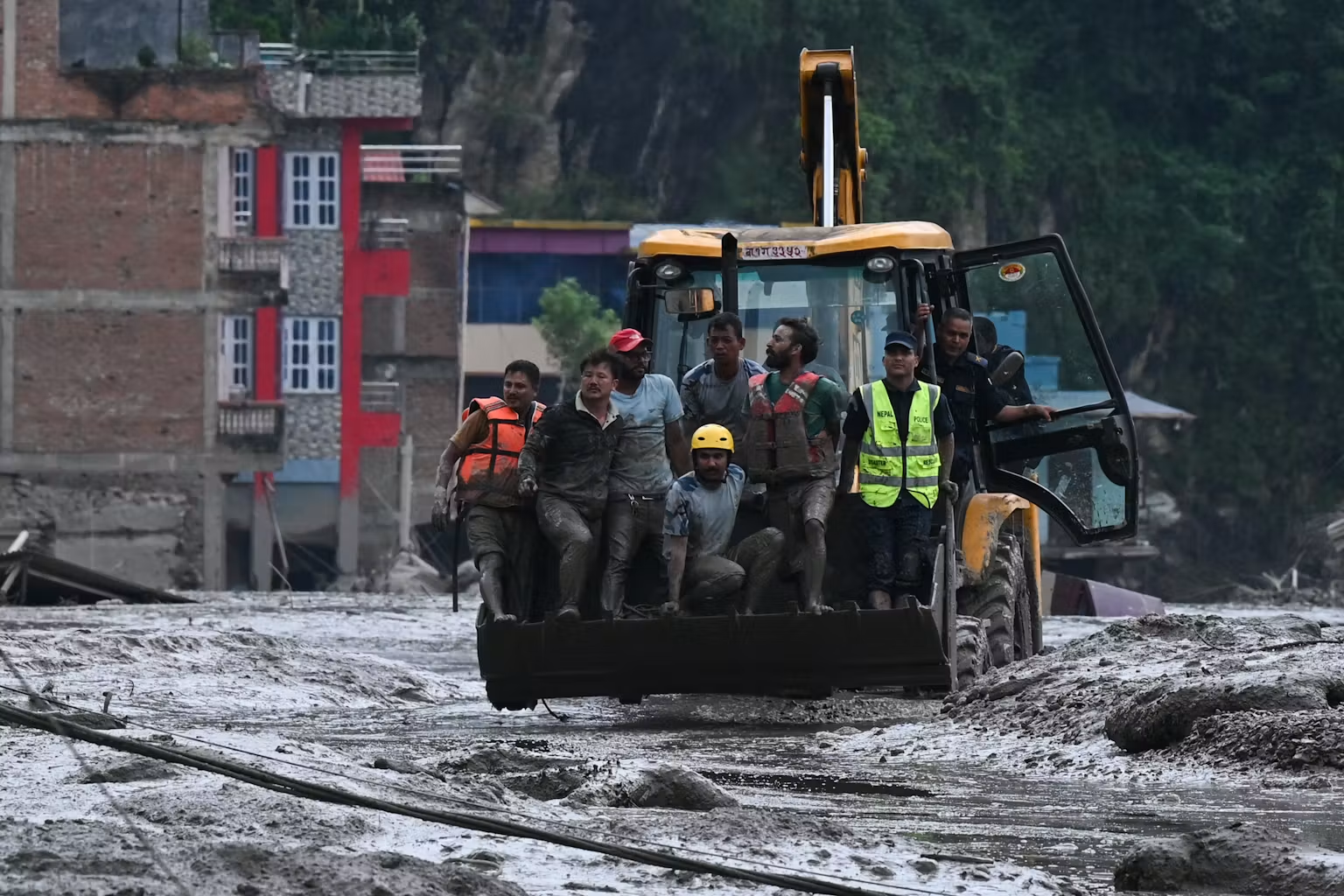
Rescue operations in flood-hit northern Nepal have been temporarily disrupted after a landslide-created lake began overflowing, raising fears of another surge of water downstream as authorities continue searching for hundreds of missing people.
The latest development comes two days after a devastating flash flood swept through communities and infrastructure near Nepal’s border with Tibet, leaving at least 469 people dead in Nepal and hundreds more unaccounted for.
Reuters reported on Friday that the landslide-created lake had begun overflowing, forcing Nepalese and Chinese rescue workers to temporarily halt operations because of the renewed danger. The lake has grown to more than 2.5 million cubic metres of water.
Fresh flood threat emerges during rescue operation
The newly formed lake developed after debris from the disaster blocked a river channel in the Himalayan region.
As water accumulated behind the debris barrier, authorities became increasingly concerned that a sudden release could send another powerful surge downstream.
The overflow reported on Friday has complicated an already difficult search operation.
Rescue teams have been working in areas where roads, bridges and other infrastructure were swept away by the original flood. The mountainous terrain and unstable conditions have made access particularly difficult.
Reuters reported that rescue workers were forced to pause operations temporarily because of the danger posed by the overflowing lake.
Nepal death toll reaches 469
Nepal’s confirmed death toll has reached 469, according to the latest reporting based on Nepal Police figures.
The number is expected to remain subject to change as rescue teams reach damaged and previously inaccessible areas and authorities continue identifying recovered victims.
The disaster struck on August 26 after an enormous flow of water, rock, ice and debris moved through Himalayan river systems, devastating communities in the Rasuwa area and farther downstream.
AP reported that Nepal had recorded 469 deaths and 977 people missing in its latest accounting.
The figures are separate from casualties reported on the Chinese side of the border.
Hundreds remain missing
The search for missing people remains the central priority for authorities.
AP reported that 977 people were missing in Nepal, while China’s Gyirong County in Tibet reported 558 missing people and three deaths. The two sets of figures concern different administrative areas and should not automatically be combined as a single Nepal casualty figure.
Reuters, meanwhile, reported that nearly 1,000 people remained missing across Nepal and the Tibetan region, including about 540 foreigners.
Authorities are continuing to verify the numbers as information arrives from remote areas and families report missing relatives.
Why the new lake is dangerous
The lake formed when landslide debris blocked the river.
Such a barrier can temporarily hold back a large volume of water. If the barrier becomes unstable or water overtops it rapidly, a sudden release can send water and debris downstream.
That creates a particular danger in a narrow Himalayan valley, where communities and infrastructure may have little time to respond to a sudden rise in river levels.
The latest overflow does not mean that another catastrophic flood has definitely occurred, but it has created an additional hazard for people downstream and for rescue workers operating in the affected area.
China is also monitoring a separate water threat
Authorities on the Chinese side of the border are monitoring another debris-dammed lake.
Reuters reported that China expected approximately 3 million cubic metres of water to flow into the already dammed lake over a three-day period. Chinese authorities have been monitoring the situation and have warned about the possibility of a breach.
An engineering team has been deployed to survey the area and assess the condition of the barrier.
The situation means authorities on both sides of the border are dealing with not only the consequences of the original flood, but also the possibility of further flooding from water trapped behind debris.
Rescue work faces major obstacles
The original flash flood caused extensive damage to transport and power infrastructure.
Roads and bridges were washed away, cutting off some communities and making it harder for rescue teams to reach affected locations.
The disaster also damaged infrastructure along the important route connecting Kathmandu with Lhasa.
Helicopters and specialist rescue teams have been deployed to assist the operation, but poor access, unstable terrain and the renewed flood risk are limiting what teams can safely do.
The temporary suspension caused by the overflowing lake could delay efforts to reach some people still missing.
The disaster also affected foreign nationals
The Himalayan route affected by the disaster is used by tourists, pilgrims, workers and other travellers.
Reuters reported that around 540 foreigners were among those missing across the affected Nepal-Tibet region in its latest assessment.
AP reported that people from more than 30 countries were among those reported missing following the disaster.
The number of missing foreign nationals is expected to change as governments and Nepalese authorities continue comparing lists and confirming the status of people who were travelling through the region.
What caused the original disaster?
The exact sequence of geological events remains an important subject of investigation.
Current reporting links the disaster to a major ice-and-rock collapse or avalanche that generated a massive debris flow through the river system.
Reuters previously reported that a seismic signal associated with the event was initially interpreted as a possible earthquake, but subsequent analysis indicated that the signal was generated by the collapse itself rather than an ordinary earthquake triggering the disaster.
For that reason, the cause should not be described simply as an earthquake.
Authorities and scientists are continuing to examine satellite imagery and other information to understand precisely how the collapse developed and how the resulting flood travelled downstream.
What happens next?
The immediate priority is to determine whether rescue teams can safely return to the affected areas while monitoring the overflowing lake and downstream rivers.
Authorities are expected to continue:
- monitoring water levels;
- assessing the stability of debris barriers;
- searching for missing people;
- recovering and identifying victims;
- evacuating communities where necessary;
- clearing damaged roads;
- restoring communications and electricity;
- assessing damage to bridges and other infrastructure.
The death toll and missing-person figures may change as authorities gain access to more areas.
Latest confirmed figures
| Development | Latest information |
|---|---|
| Nepal confirmed deaths | 469 |
| Missing in Nepal | 977, according to AP’s latest reporting |
| Missing in Tibet’s Gyirong County | 558 |
| Foreigners among missing | About 540, according to Reuters’ regional figure |
| Newly formed lake | More than 2.5 million cubic metres |
| Additional water expected in China’s monitored lake | About 3 million cubic metres over three days |
| Rescue operations | Temporarily disrupted by renewed flood danger |
| Main affected Nepal district | Rasuwa |
| Disaster date | August 26, 2026 |
Casualty and missing-person figures are still being verified and may change as search and identification operations continue.
Nepal’s rescue operation enters a more dangerous phase
The latest lake overflow adds another layer of danger to an already catastrophic disaster.
For families waiting for information about missing relatives, the temporary disruption to rescue operations is another setback. For authorities, the immediate challenge is to balance the search for survivors with the need to prevent rescuers and downstream communities from being exposed to another sudden flood.
The situation remains active, and Nepal Monitor will update this report as authorities release verified information about the lake, rescue operations, casualties and missing people.
FAQs
1. Why were rescue operations in Nepal temporarily paused?
Rescue operations were temporarily disrupted after a landslide-created lake began overflowing, increasing the risk of another surge of water and debris downstream. Rescue teams needed to assess the renewed danger before continuing operations.
2. How large is the landslide-created lake?
The lake has grown to more than 2.5 million cubic metres of water, according to the latest Reuters reporting cited in the article.
3. Could the overflowing lake cause another flood?
Yes, the overflowing lake creates an additional downstream flood risk. However, an additional catastrophic flood should not be described as certain. Authorities are monitoring water levels and the stability of the debris barrier.
4. How many people have died in the Nepal flash flood?
Nepal’s confirmed death toll has reached 469, according to the latest reporting based on Nepal Police figures.
5. How many people are missing in Nepal?
The latest AP reporting cited in the article puts the number of missing people in Nepal at 977. The figure remains subject to verification as rescue and identification operations continue.
6. How many people are missing in Tibet?
AP reported 558 people missing in China’s Gyirong County, along with three deaths. These figures relate to the Chinese side of the border and should not be added to Nepal’s figures as Nepal casualties.
7. How many foreigners are missing?
Reuters reported that approximately 540 foreigners were among those missing across the affected Nepal-Tibet region. Authorities continue to verify the identities and status of missing people.
8. What caused the Nepal flash flood?
Current reporting links the disaster to a major ice-and-rock collapse or avalanche that generated a debris flow. The exact sequence and trigger of the geological event remain under investigation.
9. Was an earthquake responsible for the Nepal flood?
An earthquake has not been established as the definitive cause. Earlier reports suggested an earthquake might have triggered the collapse, but subsequent analysis indicated that the seismic signal was generated by the collapse itself.
10. Which part of Nepal was most affected?
Rasuwa district, near the Nepal-China border, was among the worst-affected areas. The disaster also affected communities and infrastructure farther downstream.
11. What rivers were affected by the disaster?
The disaster affected the Lhende Khola, Bhote Koshi and Trishuli river systems.
12. Is China monitoring another flood threat?
Yes. Chinese authorities are monitoring a separate debris-dammed lake. Reuters reported that approximately 3 million cubic metres of water was expected to flow into that lake over three days, with authorities monitoring the possibility of a breach.