


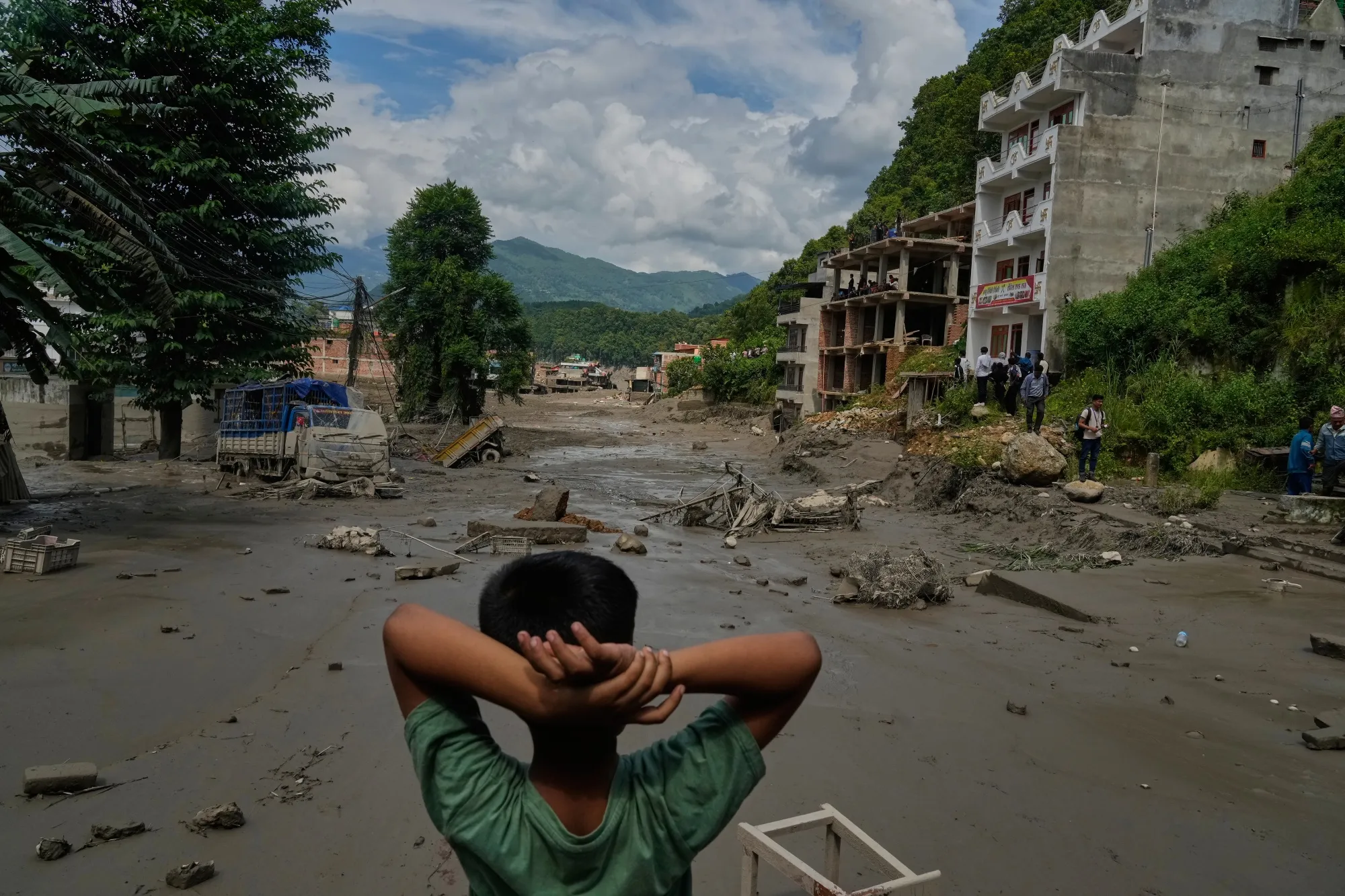
Nepal’s confirmed death toll has risen to 469 after a devastating flash flood and landslide struck the Nepal-China border region on August 26, with rescue teams continuing to search through mud and debris for hundreds of missing people.
Rescue operations were continuing across parts of northern Nepal on Friday as emergency workers used heavy machinery, helicopters and search dogs to look for survivors and recover victims from communities devastated by the disaster.
The flooding struck the Himalayan border region on Wednesday morning, sending a huge surge of water, rock, ice and mud through river valleys in Nepal and across the border into Tibet.
According to the latest Reuters reporting, Nepal’s confirmed death toll reached 469 people early Friday, while almost 1,000 people remained missing in Nepal and neighbouring Tibet. At least 540 of those reported missing were foreigners.
What happened in Nepal?
The disaster began in the Himalayan region near the Nepal-China border on August 26.
A large ice-and-rock collapse occurred high in the mountains and sent debris into the river system. The resulting surge travelled downstream through the Lhende Khola before entering the Bhote Koshi and Trishuli river systems.
The flooding devastated communities and infrastructure in Nepal’s Rasuwa district before affecting areas farther downstream, including parts of Nuwakot and Dhading.
Reuters reported that villages, roads, bridges and power infrastructure were destroyed, while the route connecting Kathmandu with Lhasa was severely affected.
The Rasuwagadhi border area and the Chinese side’s Gyirong border crossing were also badly damaged.
What caused the flash flood?
The exact chain of events is still being investigated.
Initial reports suggested that an earthquake in the region may have triggered a glacier collapse. However, subsequent analysis changed that understanding.
Reuters reported that the US Geological Survey determined that the seismic signal initially interpreted as an earthquake was generated by the collapse of rock and ice itself. The event was subsequently recorded as a magnitude 5.2 seismic event associated with the landslide.
A preliminary analysis of satellite imagery by Nepal’s National Disaster Risk Reduction and Management Authority indicated that an ice-and-rock landslide created a debris-laden flood in the Lhende River, approximately 20 kilometres northeast of the Rasuwagadhi border crossing.
However, Nepalese officials have stressed that the precise cause remains under investigation.
The Kathmandu Post reported that authorities on both sides of the border had not yet established exactly what triggered the enormous flood. Officials were seeking additional satellite information and real-time data to determine the origin and mechanism of the event.
For that reason, the disaster should currently be described as being linked to a glacier/ice-and-rock collapse and resulting debris flow, rather than claiming that a particular earthquake definitively caused it.
Which parts of Nepal were affected?
Some of the worst damage occurred in Rasuwa district, close to the Nepal-China border.
The flood then travelled downstream through the Bhote Koshi and Trishuli river systems.
Affected areas have included:
- Rasuwa
- Timure
- Syapru Besi
- Nuwakot
- Dhading
- communities along the Bhote Koshi and Trishuli rivers
The scale of destruction has made access difficult for rescue teams.
Al Jazeera reported that at least 19 bridges and approximately 40 kilometres of roads were washed away, while helicopters, drones, soldiers and search teams were being used in rescue operations.
Hundreds of people remain missing
The number of missing people has changed as authorities continue identifying survivors and victims.
The latest Reuters report said almost 1,000 people remained missing across Nepal and Tibet, including at least 540 foreigners.
Many foreign nationals were travelling through the region as pilgrims or tourists.
Earlier reporting identified missing people from several countries, including India, the United States, Australia, the United Kingdom and Canada. However, nationality figures have changed as authorities continue verification, so individual totals should not be treated as final.
Rescue teams continue searching
Nepalese authorities have deployed military helicopters and rescue teams to reach isolated communities and transport survivors.
Emergency workers have also been using heavy machinery and search dogs to locate people and recover bodies from mud and debris.
Some communities remain difficult to reach because roads and bridges were destroyed and river levels remain dangerous.
The disaster has also damaged electricity and communications infrastructure in affected areas, making it harder for families to establish contact with relatives.
Authorities warn of another possible flood threat
The immediate disaster may not yet be over.
Nepal’s disaster management authorities warned that a lake formed when debris blocked the Bhote Koshi River was rising and could potentially breach.
On the Chinese side, authorities were also monitoring a separate debris-dammed lake.
Reuters reported that China expected roughly 3 million cubic metres of water to flow into an already dammed lake over three days, with Chinese authorities warning that the lake could breach. Chinese state media reported that peak flow could occur around September 1.
Chinese authorities have deployed an engineering team to conduct aerial surveys and three-dimensional modelling of the barrier lake.
Because of the continuing danger, authorities are monitoring river levels and warning communities downstream to remain alert.
Why the disaster is difficult to respond to
The affected region is mountainous and difficult to access even under normal conditions.
The floods destroyed roads and bridges that are normally used to connect communities near the Nepal-China border with the rest of the country.
The damage also affected an important route between Nepal and Tibet.
The Kathmandu Post reported that the disaster renewed concerns about the lack of a fully functioning cross-border system for sharing real-time information about floods and landslides.
Nepal and China had discussed mechanisms for sharing information after a previous flood in the region, but authorities have continued to face difficulties obtaining timely information during the latest disaster.
What happens next?
The immediate priority remains search and rescue.
Authorities are expected to continue:
- searching for missing people;
- recovering and identifying victims;
- evacuating people from high-risk areas;
- delivering food, water and medical supplies;
- monitoring rivers and debris-dammed lakes;
- restoring damaged roads and communications;
- assessing damage to hydropower and other infrastructure.
The confirmed death toll may change as rescue teams reach areas that remain inaccessible.
Key facts
| Fact | Latest confirmed information |
|---|---|
| Date of disaster | August 26, 2026 |
| Main affected area | Nepal-China border / Himalayan region |
| Nepal death toll | 469 confirmed |
| Missing across Nepal and Tibet | Almost 1,000 |
| Foreigners among missing | At least 540 |
| Major affected river systems | Lhende Khola, Bhote Koshi and Trishuli |
| Major Nepal district affected | Rasuwa |
| Other affected districts | Nuwakot and Dhading |
| Main rescue agencies | Nepal Army and other emergency services |
| Additional risk | Rising debris-dammed lakes |
Figures are based on the latest available reporting and may change as authorities verify missing-person and casualty records.
Nepal’s worst-hit communities await answers
For families still waiting for information about missing relatives, the disaster remains an unfolding emergency.
Rescue teams are continuing to work through damaged roads, unstable river channels and large deposits of mud and debris while authorities investigate what triggered the sudden release of water and debris.
The disaster has also highlighted the vulnerability of communities living along Himalayan river systems, where sudden ice, rock and water movements can travel rapidly downstream.
For now, officials remain focused on finding survivors, recovering victims and reducing the risk of further flooding.
Nepal Monitor will update this report as authorities release verified information on casualties, missing people, rescue operations and the cause of the disaster.
Frequently Asked Questions
What happened in Nepal on August 26, 2026?
A major flash flood and landslide struck the Himalayan region near the Nepal-China border on August 26, 2026. The resulting surge of water, rock, ice and mud travelled downstream and caused extensive destruction in parts of northern Nepal.
How many people have died in the Nepal flash flood?
The latest confirmed figure cited in the article is 469 deaths in Nepal. The number may change as rescue teams reach areas that remain difficult to access.
How many people are still missing?
Almost 1,000 people were reported missing across Nepal and Tibet in the latest Reuters report cited by the article.
How many foreigners are missing?
At least 540 foreigners were reported among those missing, according to the latest Reuters reporting cited in the article.
Which part of Nepal was worst affected?
Rasuwa district, near the Nepal-China border, was among the worst-affected areas. Other affected areas included parts of Nuwakot and Dhading.
What caused the Nepal flash flood?
Authorities have not established a definitive cause. Preliminary analysis linked the disaster to an ice-and-rock landslide and resulting debris flow, while the exact trigger remains under investigation.
Was the flood caused by an earthquake?
The article does not state that an earthquake definitively caused the disaster. Initial reports suggested an earthquake may have triggered the collapse, but subsequent USGS analysis indicated that the seismic signal was generated by the collapse itself. Nepalese authorities said the exact cause remained under investigation.
Which rivers were affected?
The disaster affected the Lhende Khola, Bhote Koshi and Trishuli river systems.
Are rescue operations still continuing?
Yes. Rescue teams and Nepalese military personnel are continuing searches for survivors and missing people, while authorities are also working to recover victims and provide assistance to affected communities.
Is there still a risk of more flooding?
Yes. Authorities are monitoring debris-dammed lakes and rising water levels because a breach could produce additional downstream flooding.
Which infrastructure was damaged?
The disaster damaged roads, bridges, electricity infrastructure and other facilities in the affected region. The important route connecting Kathmandu with Lhasa was also severely affected.